Describe the loop before the dashboard
Automation begins with a measurement, a decision and an action. A complete control loop also checks whether the action produced the expected result. A temperature reading can trigger a vent command, but a command alone cannot confirm that the vent moved. Feedback may come from position sensing, motor status, another process measurement or a documented operator check.
Write the operating sequence in plain language before choosing screens and graphics. Identify normal operation, manual intervention, equipment interlocks and abnormal conditions. An interlock is a condition that permits or prevents an action, such as preventing a pump from running when the source tank is too low. It should have a stated purpose and a testable response.
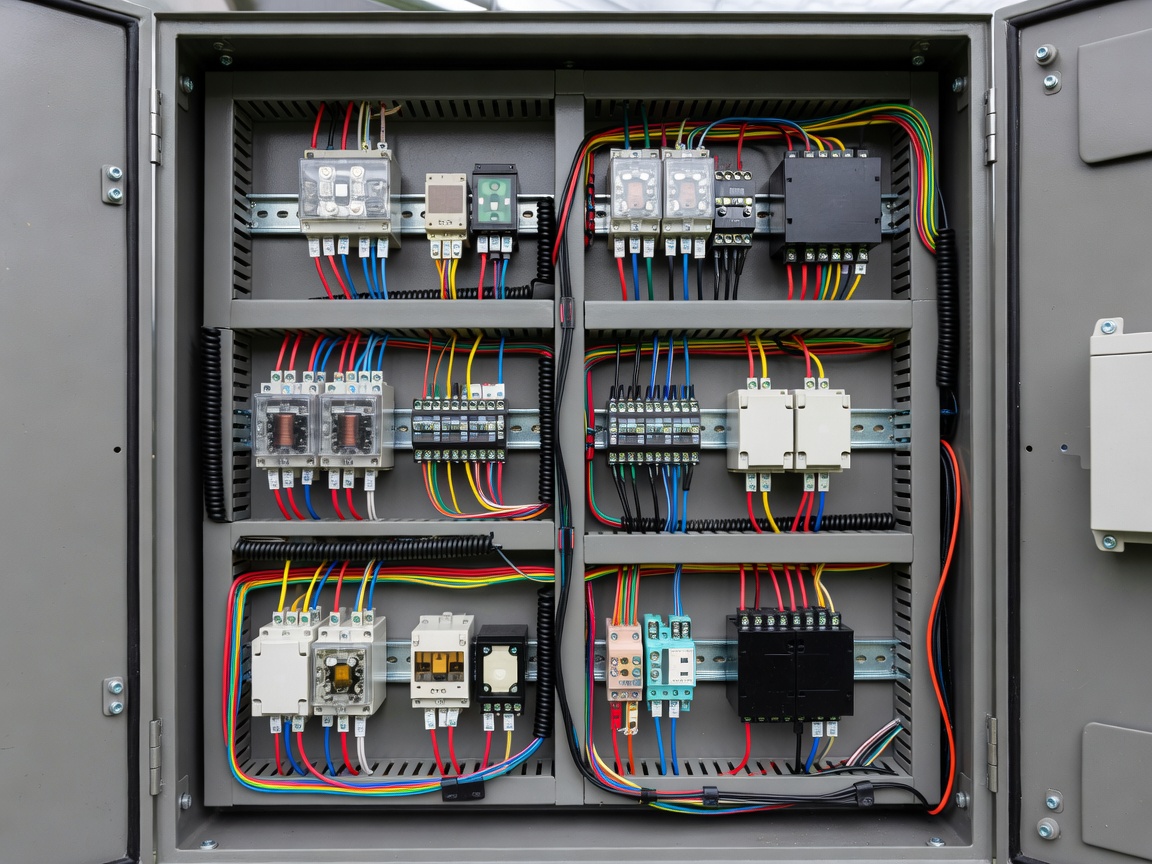
A programmable logic controller, or PLC, is an industrial controller used to execute configured logic. IEC 61131-3 defines programming languages for programmable controllers. A reference to that standard does not establish that a particular programme is suitable, secure or safe. The implemented behavior still needs review and testing.
Keep measurements traceable and believable
For each sensor, define its measured quantity, location, unit, expected operating range and checking method. Record whether the signal represents a direct measurement or a calculated value. Give operators enough context to recognise a frozen reading, an implausible jump or disagreement between related measurements.
Calibration establishes a relationship to a reference under stated conditions. Verification checks whether a device meets a specified requirement. Neither should be reduced to a checkbox without identifying the method and acceptable result. Humidity, pressure, flow and electrical conductivity instruments have different maintenance needs; plan access and spares accordingly.
Trend records are useful only when their time stamps and units are consistent. Specify how clocks are maintained, which events are logged and how a data gap is displayed. A smooth chart created by interpolation can hide a communication failure, so missing observations should remain distinguishable from measured values.
Specify integration beyond a protocol name
Modbus and OPC UA are examples of industrial communication technologies that may appear in an integration proposal. A shared protocol name does not mean two products exchange useful information automatically. The parties must agree on data points, units, update behavior, permissions, error handling and responsibility for maintaining the interface.
Ask who owns the configuration and how it can be exported or restored. Define whether historical data are accessible without a continuing subscription, and what functions remain available if an internet connection is lost. Local control, remote viewing and cloud analytics are different functions and should be assessed separately.
The National Institute of Standards and Technology, known as NIST, publishes operational technology security guidance. IEC 62443 is a series addressing security for industrial automation and control systems. Their principles support questions about network segmentation, account management, remote access and change control; they are not a reason to claim that an unspecified installation is secure.
Define failure behavior and human authority
There is no universally safe position for every greenhouse actuator. Closing a vent might protect equipment during a storm while increasing heat risk. Opening a valve might relieve one process problem while creating flooding elsewhere. Determine responses through a project-specific risk assessment and clearly allocate responsibility for those decisions.
Distinguish process automation from machinery safety functions. An ordinary dashboard alarm is not automatically a protective safety system. IEC 60204-1 concerns electrical equipment of machines within its scope, and ISO 12100 provides a framework for machinery risk assessment and risk reduction. Qualified specialists should determine which requirements apply to the actual equipment.
Manual overrides need visible status, access control and a defined route back to automatic operation. Operators should be able to understand why an expected action is blocked. Alarm messages should identify the affected equipment, the condition detected and the appropriate first response, without overwhelming staff with repeated symptoms of one underlying fault.
Turn the specification into acceptance tests
A factory acceptance test checks agreed behavior before shipment or deployment. A site acceptance test checks the installed system, including real wiring, equipment and interfaces. Neither term guarantees a complete test scope. Build a matrix connecting each requirement to a test, expected result, evidence record and responsible person.
Start with input and output checks, then test operating sequences and faults. Demonstrate sensor disconnection, lost communications, power interruption and recovery using safe, planned methods. Verify that irrigation and climate equipment do not restart in an unintended state. Preserve the tested configuration and document later changes.
Good automation makes the system more legible. It can support consistency and faster diagnosis, but it does not remove the need for agronomic judgement or maintenance. Return to the structure, climate and water assumptions whenever an automation promise depends on physical capability that has not been demonstrated.